Best Video Conferencing Apps for Work and Family

Today, video conferencing is a fact of life – whether we are using it to work from home, attend school or keep in touch with family and friends. And its popularity will likely continue with the increasing numbers of remote jobs and home workers. So, what are the best video conference apps? The answer depends on what you will be using it for, so we’ve covered as many options as we can in this blog.

A person, viewed from behind, is on a video conferencing app talking to another person on a laptop that is on their kitchen table.
Photo by LinkedIn Sales Solutions on Unsplash

Best for freelancers and small businesses

In the last year, Zoom has become almost ubiquitous with the term video conference apps, thanks to its fairly generous free plan (Zoom basic), dependability, and ease of use. The free version allows you to hold unlimited meetings for up to 100 people and offers streaming, screen sharing, session recording, and breakout rooms, among other features.

Its biggest downside (although some would argue this is also a positive) is the 40-minute limit on any meeting with three or more attendees. However, there are paid plans for companies that require longer meetings, live tech support, cloud storage, company branding, or having more than one person schedule meetings.

Microsoft Teams is another good choice for online meetings, and its full integration with Office 365 and dedicated conversation channels makes it very flexible for work teams.

A person is sat in a cafe at a desk with a whiteboard in front of them, looking at a video conference app on their laptop, which is on a desk with someone on a call with them.
Photo by LinkedIn Sales Solutions on Unsplash

Best for family and friends

When meeting up with family and friends, the emphasis is usually on ease of use rather than business-friendly features. Google Hangouts is great for this, and while the free version only allows online meetings of up to 10 people, it requires just a few clicks to set up a meeting and can be used either in a web browser or via the app.

If you want to spice up your get-togethers with more features, the free Jitsi Meet is a good video conference app choice. It requires no setup or account and boasts extras like in-meeting YouTube video playback and live-streaming. It even allows tech-minded users to download the source code and set up their own server.

Skype Meet Now is a popular choice for those who are already familiar with Skype. Its free tier offers video conferencing for up to 50 people, screen sharing options, and the ability to automatically blur backgrounds as well as adding live subtitles.

A person lays on a bed looking at their laptop which is displaying a web conference app with multiple people displayed on the screen.
Photo by Surface on Unsplash

Best for larger businesses

Provided as part of Google Workspace (formerly G Suite), Google Hangouts’ premium brother, Google Meet, is geared more towards business. The free offering has a 100 person, 60-minute limit, with paid plans which offer the ability to host meetings for up to 250 people and 100,000 live-stream viewers, a large amount for a video conference app.

For those who need a more serious video conferencing tool, GoToMeeting has paid plans that will support up to 3,000 guests, and include automatic transcription, unlimited cloud recording, whiteboard capabilities, and 24/7 phone support. Hosts can even hand over control to another participant.

Another option is Bluejeans, a high-end video conferencing service that is both easy to use and to adapt to your needs. Hosts can create up to 20 breakout sessions and annotate the screen like a whiteboard. The service also supports directional audio for Dolby Sound-enabled rooms.

Cisco Webex Meetings, on the other hand, has a professional feel and allows free video meetings with up to 100 people, including private chat rooms. Paid plans offer the ability to make and store MP4 recordings of your meetings, customizable layouts, and a number of AI-powered features, such as a voice-activated digital assistant to automate common meeting tasks, real-time transcription, and closed-captioning.

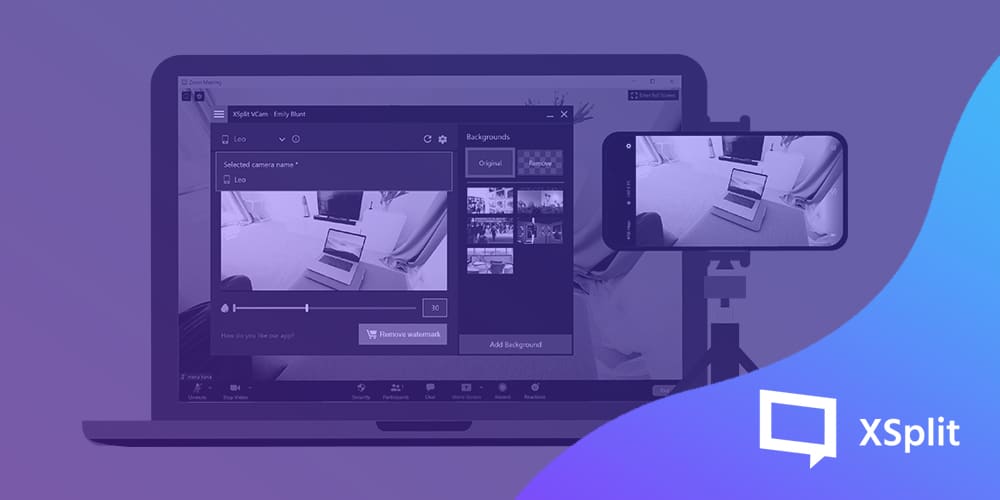
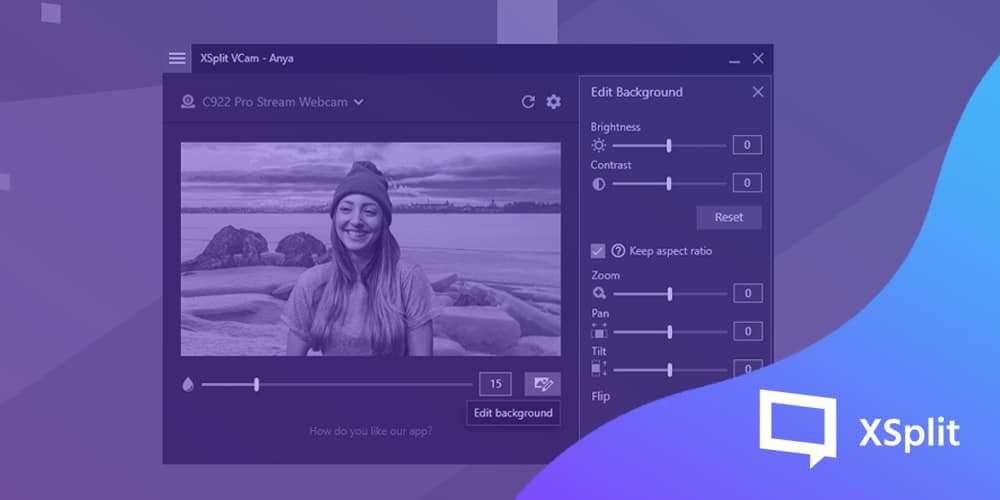
Whether you’re organizing a D&D session for 10, a family birthday party, an online lesson, or a business conference for 1,000 participants – there’s a video conferencing service out there that will suit your needs. Find out how you can also add XSplit VCam to some of these apps easily here to remove, replace or just blur your webcam background! Something that’s vital for privacy but also great to add a bit of fun to a family call!
The Best Work From Home Apps for Increasing Your Productivity

You’ve heard it before – to stay productive, you need to treat working remotely the same way as you would working from the office. But to really be efficient, the key is to work smarter not harder. There’s no one-size-fits-all answer to increasing your productivity because we all have different lives and lifestyles – not to mention different jobs. But one universal is that the right tools can help you to do more when it comes to your productivity. In this blog, we’re going to take a look at some work from home apps that can help you achieve your goals.

A person, sat on the floor using their laptop using some of the best work from home apps.
Photo by Thought Catalog on Unsplash

Note-taking productivity apps for working from home

For many, being productive while working at home means staying focused and not getting side-tracked by an interesting podcast or Netflix show. For others, productivity is all about being able to find what you need quickly – from emails to meeting notes. For both types of home workers, there are work from home apps to help.

The Evernote note-taking app can help you organize everything from recipes to audio files. It allows you to capture notes through writing, audio, photos, pdfs, digital sketches – almost any way of recording information. Type in a word or key phrase and Evernote will search through all of your documents and images for that search term. You can also use it to share notes with others, and collaborate on creating and editing documents.

Microsoft OneNote is another note-taking app, designed to sync up with other Microsoft products. You can insert text, images, and other types of documents onto a page and then move them around – and it’s particularly useful for linking up with Microsoft OneDrive and Outlook. It also comes with a host of special features, like allowing you to sync up audio recordings of lectures with the notes you take.

If you’re more familiar with the Apple universe, you could use Apple Shortcuts instead. This app allows you to automate a series of actions, such as automatically putting your phone on silent when you reach the office, or when you have a meeting.

A person wearing a beanie with their back to the camera and a flask on their desk as they use the best work from home apps.
Photo by Sigmund on Unsplash

Become an organizational wizard

Is your ‘to-do’ list written on scraps of paper scattered all over your desk? If so, you may want to consider Todoist (pronounced to-do-ist, rather than rhyming with ‘moist’) which makes our best work from home apps. This electronic to-do app allows you to create joint lists with other people and can handle up to 80 projects. The paid plan includes reminders, labels, and the ability to add comments to tasks.

Organisation also extends to your computer desktop. While some people keep their desktop tidy, others struggle to maintain a carefully organized or hierarchical folder structure. X1 Search can help, with an app that allows you to quickly find anything on your computer. X1 will search through your desktop, email, calendars – everything – for that elusive file you could have sworn was right there.

Apps for creative collaboration

Workplace tools for collaboration and communication are transforming how teams get work done together. But there is more out there than Microsoft Teams and Slack. While those are great apps, they don’t always suit smaller teams.

If you are looking for a work from home app that can create diagrams and will also support collaboration, you could try Lucidchart. With very reasonably priced accounts for teams of three people, Lucidchart allows you to create and share diagrams, allowing more than one person to work on a diagram at the same time. It also comes with a huge template gallery.

Asana was one of the first workplace tools for collaboration and communication and it is still one of the best. It works a bit like a collaborative to-do list app with a host of features that will help your team stay on track and stay productive. Unlike apps that focus on projects, with defined start and end dates, Asana lets you keep track of ongoing work.

A person sits at a desk with many clothing samples on a table and behind them as they use their laptop giving a presentation using the best work from home apps.
Photo by LinkedIn Sales Solutions on Unsplash

Apps to make your presentations picture perfect

Tired of creating Powerpoint presentations and wishing you could do more? XSplit Presenter might be the work from home app you need to make your slideshows come alive. Our presentation app lets you give a professional presentation that keeps your audience engaged, entertained, and most importantly, informed!

XSplit Presenter lets you add personality and flair by easily adding yourself into the presentation and even includes a virtual green screen that removes your background giving your presentation room to breathe while immersing you as a part of it! It also works as a virtual camera in software like Zoom, Microsoft Teams, and Google Meet so you don’t need to worry about accidentally showing the entire meeting your desktop!

That’s not all though, you can annotate your presentations in real-time with a virtual pointer and drawing tools which can easily let the viewer focus on the right thing at the right time. It also lets you answer questions immediately and elaborate on what is already in your presentation. Which, speaking of your presentation, XSplit Presenter works with your existing presentation so if you’re using Google Slides or Microsoft Powerpoint you can easily add that, along with your presenter notes, into XSplit Presenter!

A person sits at a desk in thei spacious home with windows behind them showing trees. A laptop is on their desk as they use the best work from home apps.
Photo by Surface on Unsplash

Speeding up your WFH productivity

Are you finding your typing too slow to keep up with your thoughts? SwiftKey Keyboard could help. This is a custom keyboard that works with both Android and iOs operating systems and lets you type by swiping around the keypad, rather than pressing keys the old-fashioned way. It is particularly useful for emailing and writing documents while on the go.

If you are finding it difficult to adapt healthy WFH habits, RescueTime could help. This app is a time tracking tool that records the other apps you use, websites you visit, and even the time you spend away from the computer. You can also classify different sites based on their role in your productivity, and block sites during work hours that are distracting you from your work. This is a great app for those who find themselves just wanting to read that one more news item before getting back to work.

Today’s WFH world is no longer just about meeting deadlines, but juggling all of the demands in a way that suits your lifestyle. Whether that’s doing fewer rote tasks or spending more time with your family – there’s a productivity app for working from home that can help!

Online Presentations: Top Tips to help you Succeed!

Online presentations have, quite simply, never been more important than they are today. With remote work now the new normal for most of us, making a good impression on screen should be a priority. Whether you’re presenting to colleagues at work, or to a prospective client, it’s important that you have the best and most flexible setup and tools available. Here at XSplit, we can help you out with some useful advice and amazing tool recommendations. Read on to learn more!

A person sits at their laptop, surronded by notebooks as they themselves make notes in preparation for an online presentation.
Photo by Windows on Unsplash

Preparation is key

The right preparation can help you to create a better remote presentation. Before you start, make sure that the lighting will leave you looking your best, or at least visible. Ensure that you have a good front light, so it shines brightly on your face. If the room you are using doesn’t have enough natural light, you could consider purchasing supplemental lighting to enhance your image.

Try to use a background that enhances your professional image and is aligned with your message. This will mean avoiding clutter and distracting images. Using a presentation platform that allows you to blur the background or, even better, inserting a virtual background with XSplit VCam, can be a big asset in creating the perfect look and feel for any presentation.

A remote presentation is a type of performance, and the best way to a smooth online performance is to know your technology. It’s a good idea to have a dry run, including a soundcheck, to get comfortable with the platform features, and to have a co-host or moderator to assist you with the technology during the presentation.

If possible, plug your computer directly into your router using an Ethernet cable. This will give you the best shot at a stable internet connection. Remember that a weak or unstable internet signal can ruin even the best presentation.

An above view of a desk, someone is using their laptop with notes next to them and a cup of tea as they give their online presentation.
Photo by Daniel Thomas on Unsplash

And … action! What to do in front of the camera

Just as it’s important to make eye contact with an audience when presenting live, you should look directly into the camera when presenting remotely. One trick is to place the camera at eye level – this helps to avoid the dreaded double-chin appearance from a camera that is positioned too low, or constantly looking up at people if it is positioned too high.

Ideally, the camera should frame your face, neck, and shoulders. Practice your positioning to find the sweet spot between being too far away, so you appear far off in the distance, and being too close, so that you are just a giant, disembodied head.

Standing up can add a sense of animation and energy to your presentation. If you are sitting, you can add some energy by leaning forward, as if you were a TV news anchor. Leaning back and slouching gives the impression that you are disconnected from the audience.

Remember that the best way to keep people engaged virtually is to be engaging. Research shows that happy and engaged people retain information better than bored people, so model the energy that you want to create. One trick to doing this is to smile. This can help you sound, as well as look, more engaged.

A side shot of a person at a desk with their notes and phone next to their laptop as they give an online presentation.
Photo by Headway on Unsplash

Adding visual appeal

Researchers have found that people remember much more of what they see than what they hear. This means that creating a visually interesting online presentation could be the key to engaging your audience. Consider incorporating polls, videos, raised hand features, etc. Try not to speak for more than a few minutes without some sort of audience engagement.

The flip side to this is that audience comments and chats can be distracting, particularly if you try to read them while speaking. Instead, have the co-host or assistant monitor this for you. Another option is to engage directly with the chats by acknowledging them, reading them out loud, and then commenting on them, a bit like a radio show.

One benefit of remote presenting is that you can dispense with the slides and use more engaging visuals – incorporating videos and using elements like virtual pointers, and scrolling infographics. Or present information as a design feature, giving your presentation a more cinematic feel. Incorporating a ‘guest’ speaker also adds interest and can generate a sense of excitement.

To accomplish this, and make your presentations really pop, you can use a tool like XSplit Presenter! Find out how in the next section.

A person working at their fashion business easily giving an online presentation with XSplit Presenter.
Photo by LinkedIn Sales Solutions on Unsplash

An app that can do it all – and more!

The new XSplit Presenter can help you create exciting and engaging presentations with its wide range of features. Add the personal touch by becoming part of the presentation. It uses AI technology to allow you to remove your background without a green screen and integrate yourself into your presentations. Instead of a talking head – your audience will see your online presentation, with you standing at the side, narrating. XSplit Presenter also allows you to annotate your presentation in real-time, and add a virtual pointer to make rapid annotations and draw viewers’ attention to a particular point.

If something comes up during Q&A that needs you to share a window or application on your computer, you can share just that window with a few clicks – and avoid showing the audience everything on your desktop. XSplit Presenter also makes it easy to add remote guests or co-hosts into your presentation with both their webcam and microphone, whether it’s an expert to talk on a specific subject matter or someone different. It will also allow conference call guests to hear and listen to the media you play.

As for visuals, XSplit Presenter allows you to add scene transitions and to add your webcam and other overlay elements. Particularly useful are features that support YouTube, LinkedIn, Facebook, and other types of streaming, allowing you to get your presentation in front of more eyes.

Although tech like XSplit Presenter can help you create the perfect presentation, only you can bring it to life. Whether you are presenting to clients, co-workers, or investors, letting your personality show through will have the most lasting effect.

The Remote Pitch: Improve Yours Today With These Tips!

Whether you run your own business from home or are one of the many employees whose usual premises are closed at the moment, the chances are you’ll need to give an online presentation at some stage. Perhaps you have been asked to train some colleagues remotely or you may even have to give a fully-fledged business pitch online. Whatever the circumstances, the tips below will help you make the process less stressful and deliver a more professional result.

A laptop on a desk ready to make a remote pitch
Photo by Karthikeya GS on Unsplash

The Benefits of Remote Presentation

Regardless of whether you’re pitching your idea remotely or face to face, one of the key elements to a successful business pitch is human connection. Even the most amazing idea can suffer if the delivery is cold and disingenuous. It might feel as though the human touch is lost through a remote business setup. There’s no opportunity to offer drinks or make small talk in the lobby and as normal as video chat has become over the past year or so, screens can still be seen as a barrier by some.

A well-planned introduction can make almost as strong an impression virtually as in real life. Rather than diving headlong into your presentation, take time to establish a rapport with your target audience. A brief, but warm informal chat will put everyone involved at ease. Those who are a little more shy can benefit from both planning and the presence of a screen. Even the most seasoned presenter can be intimidated by an important business pitch, so why not take advantage of the slight disconnect from the real world and star in the performance of your lifetime?

A laptop on a desk next to a notepad and a cup of coffee ready to make a remote pitch
Photo by Designnn.co on Unsplash

Take full advantage of available technology

Particularly when you’re making an important business pitch online, it’s best to ensure you take full advantage of the technology available. Utilizing the newest tech tools will show you in a capable and professional light. Investing in a fast and stable internet connection should be a priority, particularly if this type of presentation is a regular task. Whilst it sometimes can’t be helped, patchy unstable video calls can, unfortunately, put a dampener on business meetings.

Most laptops have a reasonable quality webcam as standard these days, and desktop machines can be fitted with an external webcam very inexpensively. There are some amazing software packages available specifically aimed at making your remote pitch go more smoothly. XSplit Presenter is an excellent tool for presentations that allows you to have full control of your presentation! Its handy annotation function can also be a great way to interact with clients, rather than just talking at them. The ability to import Google Slides is ideal for showing a visual presentation alongside yourself, meaning that you don’t need to click between screens, losing eye contact with your clients, or potentially clicking the wrong link mid-pitch.

A person giving a remote pitch from their coffee table.
Photo by Mohammad Shahhosseini on Unsplash

The world is your oyster

Gone are the days of international travel to pitch businesses overseas. Forget the fact that it’s not really possible for most of the world to travel at the moment – there’s also really no need to! Long-haul trips to negotiate business deals are not cost-efficient for most small businesses, but it’s so easy to give a remote pitch to anyone in the world. This opens up a plethora of new opportunities to SMEs. Don’t let superficial map-drawn boundaries narrow your opportunities for success! Always do your research first, but consider the possibility that you can pitch your ideas worldwide.

It can certainly take time to adjust to our new virtual approach to historically face-to-face tasks. Armed with the right knowledge, preparation and attitude, however, you can take full advantage of the new world of working from home. Whether you present regularly or have a big one-off business pitch online, use these tips to improve your chances of winning your clients over. You can check out some additional info about XSplit Presenter here.

Work From Home Setup Upgrades You Need

If you’ve experienced the frustration of your laptop trying to run five different databases at the same time or patchy video calls that leave you frozen on the screen, we hear you! Read on for our recommendations of some top work from home equipment to improve your work from home setup.

A person stands behind a standing desk, which is a great work from home setup upgrade!
Photo by LinkedIn Sales Navigator on Unsplash

Ergonomics vs Economics

A great option for an adjustable standing desk is the Uplift V2, which was voted the best standing desk of 2020 by Tech Radar. Its dual motor means that adjusting to the perfect height for you is easy. Once you find the optimum height, its strong stability feature comes into play. This really sets it apart from many standing desks, which can tend to be wobbly. If you’re reluctant to part with your current desk, then the Ergodesk Kangaroo Pro Junior Desk Converter adjusts to offer a standing option to those of up to six feet one inch tall.

Using the wrong chair for long periods can have a detrimental effect on joints and muscles so it’s important to ensure that yours supports your spine whilst also being comfortable. The Hermann Miller Aeron chair has been deemed the cream of the crop when it comes to ergonomic office chairs, but comes with a high-end price tag. If you’re looking to upgrade without breaking the bank, the Modway EEI-757 Articulate Mesh Office Chair is a great alternative. It features many of the same benefits as the Aeron, such as breathable fabric, tilt and lock, and recline functions.

The inside of an upgraded desktop PC showing a solid work from home upgrade.
Photo by Erik Gazi on Unsplash

Kit upgrades: worth their weight in gold

Though upgrading your PC or Laptop can be the priciest improvement to your work from home setup, it can also be the one that makes the biggest overall difference to your performance. If you start out with a strong basic setup, such as the HP Envy Desktop (TE01-014), which offers powerful performance in its basic form but has plenty of space for a better graphics card or additional memory, you can upgrade as and when you can afford to.

Split keyboards, such as the Kinesis Freestyle Edge, are a solid option for those who spend a lot of time at their computer desk as their detachable palm supports and cushioned pads reduce the incidence of Repetitive Strain Injury (RSI). The Microsoft Sculpt is a great option for jobs involving a large amount of typing as its negative slope attachment is perfect for obtaining the optimum typing position.

In terms of upgrading your mouse, you can’t go wrong with the Logitech MX Vertical Ergonomic mouse, which is angled at 57% to improve wrist posture. Advanced optical tracking also means that four-times less hand movement is required. Another option is the Amazon Basics Full-Size Ergonomic Wireless Mouse, which has adjustable DPI, metallic scroll wheel and rubberized sides.

A laptop next to a coffee mug on a desk with a small plant on it. The laptop is showing a zoom call which background removal could be a good work from home upgrade.
Photo by Compare Fibre on Unsplash

Better data connections make for better social connections

Though working from home has definite benefits, it can also be quite isolating. Let’s now have a look at how we can improve those video calls to ensure you stay connected. A top-notch background tool, such as XSplit VCam, works as an embedded camera on Windows 10 – so as well as adding it to Zoom, Microsoft Teams or Skype, you can use it with pretty much any program you like, allowing you total control of your video background.

To ensure optimum stability for your video calls and streaming, the Asus RT-AC66U B1 Dual-Band Gigabit Wi-Fi router won’t break the bank. It has a wide range of features, such as a USB 3.0 port, AIProtection and allows for the creation of mesh networks. It’s powered by a 1GHz dual-core CPU, 128MB of flash memory, and 256MB of RAM and has the ability to reach maximum speeds of up to 450Mbps on the 2.4GHz band and up to 1,300Mbps on the 5GHz band.

It’s worth investing some time and energy into improving your work from home setup in order to enjoy the long-term benefits of a more comfortable and functional environment. Though upgrading your workspace can have many pluses, don’t forget just how beneficial maintaining strong connections with your colleagues whilst working from home can be. Find some top tips on how to bond with your team remotely here.

The Importance Of Agendas For Meetings

Setting agendas can make or break a meeting, especially at the moment when all our meetings are remote. An agenda adds structure, purpose and helps keep everyone aligned towards a common goal. You don’t want to spend a quarter of your meeting discussing what it is you’re about to talk about, this is the magic of Agendas! So, let’s discuss the importance of Agendas and some practical tips to help you prepare and execute your next remote meeting!

Photo by Daniel Bosse on Unsplash

Account for your time

The first thing to think about is how much your team will want to chat to each other about how they are doing and you should take account of that! The little conversations people used to have around the office have mostly been happening in text form over Slack or Teams. One thing you could do is set aside 5 minutes when setting an agenda for people to say hello and check-in with each other. Another idea, and one that could save you even more time if it’s a short meeting, set aside work time (and that part is important, don’t make it unpaid out of work time!) out of the meeting for your team to do this if they want. After all, team cohesion is important!

There are a few ways you can set up and track meetings, I recommend using Google Workspace. You can go directly to your calendar to set the meeting time, add a conference call link that will go out with the meeting invite, and add guests easily so it goes into their calendar as well. You can also add a description which is where I tend to put the meeting agenda. You can also use Google Documents for your agenda if you prefer having a larger place for all these notes to go, you can then create a link that is only visible to people attending the meeting, and that link can be put into the calendar description. I prefer to put my agenda in the description, however, as it is one less step for people to follow and everything is nice and centralized. Also, you can set it so anyone can edit the event meaning people can add their own notes, links, or attachments to the agenda!

One thing to keep in mind is agendas should be live documents, meaning they not only keep things on track but also act as a good record of what everyone said they would or wouldn’t do so you can review it in the next meeting with the same team. This is why having someone in the meeting in charge of taking notes can be vital! This would ideally be someone who doesn’t have a presentation to give in the meeting and can sit back, taking in all the information being given that isn’t already on the agenda. You can share these notes with the company at large if needed, creating a Slack or Teams channel exclusively for meeting notes can be a very useful tool to keep cohesion across teams within a company.

Photo by Surface on Unsplash

Set expectations

One thing that can be helpful is adding guidelines to your meeting notes, for example how the meeting will be lead and by who, if people should mute their mics when others are speaking, and use the “raise hand” tool if they have an immediate question or if not when questions can be taken. When typing up your agenda add expectations, for example, “Sarah will include the KPI report for Live Team”, this gives everyone a chance to prepare their part of the meeting and more importantly, know exactly what they are expected to contribute.

Get the agenda to people at the very least 24 hours before the meeting starts but ideally earlier than that so everyone has time to process and prepare what they want to discuss. Even 24 hours is a little short, ideally if you know the meeting is coming up give people a week to prepare, especially if people are giving presentations as a part of the meeting!

Adding timings to the agenda can also be useful. When you’re setting up your Google Calendar invite you can specify how long the meeting runs, in your agenda divide this time up between all the things that are going to be discussed “10mins, Sarah to discuss the Live team” etc.

Photo by Surface on Unsplash

A good way to give your presentations is with XSplit Presenter. When you join the meeting, set your camera to be XSplit Presenter and everyone will be able to see your presentation easily in the call without having to share your screen! You can create scenes for each meeting section with any relevant slides or information for each speaker and segment of the meeting. You can even import your slides from programs like Google Slides that your team has been collaborating on!

Agendas can honestly be one of the most powerful tools to help meetings go from a conversation that ends with another meeting being set because nothing got settled (these are the worst kind of meetings!) to knowledge being shared and goals being set. So, be sure to take your time with it and understand the importance of agendas for meetings!

Try These Zoom Quiz Alternatives for Online Quiz Fatigue

Let’s face it: the Zoom quiz is so last year. Those online quizzes may have kept us going through 2020 and taught everyone a lot about how to stay social from a distance, but, let’s be honest – we’ve started to get a bit jaded. Even though quizzing has done wonders for the world’s general knowledge, it’s time for a change of virtual scene. So, what else is in the pipeline for this year’s online entertainment as we look at some zoom quiz alternatives?

An image from the jackbox party pack collection.
The Jackbox Party Pack

Family quiz alternatives

If you’re looking for Zoom quiz alternatives for your family get-together, there are plenty of games online. The Jackbox Party Pack has become a night-in must-have. Jackbox Games offer bundles of fantastic, interactive digital games like “Drawful”, “Fibbage” and “Quiplash”. And best of all, it’s available on a range of platforms, including Steam, Consoles and even Apple TV. It’s super-easy to join a game (cutting down on the inter-family troubleshooting) and your smartphone acts as the controller. You might even like to split the cost between you.

Missing a good Scrabble argument with the family? Simply download the Scrabble GO app and continue. And of course, there’s always bingo. You can now create your own virtual game via BingoMaker – everyone with the code can join in.

As a Zoom quiz alternative, why not try making up a scavenger hunt? Appoint an MC who calls out from a list of household objects. The participants have to race off and find it, and the first person or team to wave it in front of their webcam wins that round.

The image of a zoom quiz on a laptop next to a phone and an iPad mini
Photo by Gabriel Benois on Unsplash

The pub without the quiz

Teams meetings, home education and the daily walk: done. It’s time for the grown-ups to relax and unwind.

If you’re keen for a change, why not email out a cocktail recipe, then have a go at making it together in real-time? XSplit Broadcaster will not only take care of the live stream but you can also use the whiteboard and annotation features to share the recipe with your guests. For non-drinkers and keen cooks, you could likewise try a culinary-themed evening. Ideally, prepare something like sushi or canapés, which are challenging to make but don’t involve heat and hot oil.

The last few months have been the toughest gig ever for musicians. If you have a friend or family member with a band, a guitar or a gorgeous voice, get your friends to chip in and set up an online gig. XSplit VCam‘s green screen feature makes it a great option for setting the scene and our powerful streaming tech means your broadcast remains seamless. Virtual performances like this are just as special and mean you’re still supporting a performer and they make a great zoom quiz alternative!

People in a zoom quiz
Photo by Charles Deluvio on Unsplash

If you really love a quiz…

OK, we’re not judging here: if you’ve really loved all the online family quizzes (and that feeling is mutual among your nearest and dearest), maybe you don’t need a zoom quiz alternative? Quizzing has become a lot more sophisticated than when we first ventured onto Zoom back in March, with hosts like Scotland’s Goose’s Quizzes developing a whole new business from the demand for online brainteasing. You might like to join in with their Twitch quizzes or engage them to run a special session for your group.

This year, you can also mix up your family quizzes with some new ideas and ways of playing. TV spin-offs can be a good idea. Try teasing out Grandma’s youthful secrets or testing everyone’s brain cells with a few rounds of numbers and letters games. Word games are a different take on the classic quiz: look up some obscure words and get people to guess their true meaning (we’d suggest getting hold of a book about obscure words or word origins for some great inspiration).

By now, we’re all (literally) at home with the idea of remote socializing. Whether you’re quizzing, gaming or hosting a virtual Bake Off, make the online experience as smooth and high quality as possible. Find out how VCam can enhance your visual online experience in our blog.

Easy Ways to Improve Webcam Quality

For many people, 2020 has meant incorporating the use of a webcam into daily work life for the first time. But even the best webcams like to suddenly go out of focus on us, which can be frustrating. With a bit of planning, you can get excellent results from your computer’s usual webcam or even the camera on your phone and improve webcam quality greatly!

Before you join the meeting, take a bit of time to get camera-ready – and read our guide to getting the best quality out of your webcam!

Photo by Nadine Shaabana on Unsplash

Easy webcam quality improvements

We’re not looking at new hardware here: this is all about working with what you’ve got. So, how can you improve webcam quality with your existing set-up? Well-thought-out lighting can make a massive difference to what’s seen on screen.

You need decent lighting, but a light too close to the camera will simply blanch your face. If you’re using natural light, make sure the window is behind the screen, not behind you (or you’ll look like a silhouette from a true-crime doc). Then, head for your webcam’s control panel, and simply fiddle with the settings until the brightness, contrast and saturation look good with your lighting. You can also adjust the settings on most meeting platforms.

For a real back-to-basics approach, dust your lens with a soft cloth. Yes, really. This can make a huge difference and improve the quality of your webcam.

Photo by Jeroen den Otter on Unsplash

Smart solutions

If you don’t have a webcam, you can use the camera on your smartphone instead. This can be a fantastic and straightforward solution, and because so many smartphones have great-quality cameras, you should get an excellent result.

An easy way to do this is to download our free XSplit Connect: Webcam app for your phone. It works with all the popular meeting platforms, and you can still carry out techy tasks like blurring the background (more about this in a minute).

Download the Connect app on your mobile and then make sure you have our VCam software installed on your laptop or PC. Open the app, which will connect to your PC, and create a handy new webcam for your meetings.

Again, make sure the lighting is clear (and yes, flattering), and we’d recommend using a phone stand so your arm doesn’t ache. Extended use of a smartphone camera can run its battery down, so just be sure to keep the charger to hand.

Photo by Standsome Worklifestyle on Unsplash

Background knowledge

Well, you can always frantically tidy up, hide the kids and drag a bookshelf into view, but we have a few simpler solutions. Zoom backgrounds have become one of the topics of 2020: when it comes to our working-from-home image, do we embrace or erase?

At XSplit, we’re all for a spot of augmented reality. XSplit VCam can blur the background, creating a flattering depth of field (like portrait mode on the iPhone camera) and adding a high-quality blurred effect to your surroundings. This not only smooths over any mess but will hide private details like family photos in the background.

You can also choose to make a feature of your background, popping up at a different exotic location for each meeting (teachers can have a lot of fun choosing a subject-appropriate setting). Because XSplit VCam supports JPEGs, GIFs, PNGs and web pages (including YouTube!), the sky’s the limit (and possibly the background).

Those are just a few of our favorite free fixes that improve webcam quality. However, if remote meetings are becoming a big part of your life, it may be worth upgrading your set-up. Take a look at our guide to the best webcams for video conferencing.

Look Amazing with VCam’s Background Adjustment Tools

Having the right background is essential for looking great and making the right impression in a video call. It can set the tone and flow of the conversation. A messy or busy background can be distracting, while a plain backdrop can look dull. XSplit VCam helps address these issues by replacing the background with a virtual photo. You can change and customize your background by using personal or online photos to help you appear professional in business calls or make personal calls look fun and interesting.

You may, however, encounter some challenges in using a virtual background. These include the following:

  1. Difference in brightness and contrast between you and the background Your face is darker than the background or vice versa. In contrast, the background does not match how you look. 
  2. Look disproportionate against the background
    Using photos with a wide-angle shot can be tricky because you may risk appearing uneven against it.   
  3. Covering and having too many objects or elements in the background Some interesting objects and elements are covered because they are in the middle of the photo. Having too many of these can make it look busy and can look visually distracting. 
VCam background adjustment

The great news is that XSplit VCam has background adjustment tools that address the above-mentioned challenges. You can adjust the background to compliment how you look.

Brightness and Contrast

Darken or lighten the background using the brightness tool to match the lighting on your face. Use the contrast tool to match the background with your look. 

VCam brightness and contrast

Zoom

Add symmetry by using the zoom tool. If the photo has a wide-angle shot, zoom in to get the right proportions and dimensions.

VCam zoom slider

Pan and Tilt 

The pan and tilt tools come in handy when you want to feature and show interesting objects or elements in the background. Having fewer objects and elements also helps the background look cleaner and focus the attention on you. The tilt tool helps you position the photo in the right angle. 

VCam pan and tilt sliders

Looking great in virtual backgrounds on video calls is made easy with XSplit VCam.  

For more tips on getting the most out of XSplit VCam, watch the Quick Start Guide video

Adjusting to Our New Normal

Before anything else, we’d like to ask, how’s everyone doing?

The current circumstance we’re living in is quite a total shift from what we have been used to. The past few weeks have been quite a struggle to most. To the more privileged ones, a time that allows for slowing down and relaxation. I’m not here to talk about social disparity but to share what I have learned through these past days. These days of coping with the changes in our routines, how we adapted to the current. Thus creating a new normal – if not for all, at least for what I have experienced.

We’re all experiencing a new way of living during this pandemic, nobody really knows when this will end. What we know is that we have to move forward and not settle on the negatives. The what we cannot have at the moment – but take into full grasp what we can do to make things better.

The new normal, in the financial world, is something we can refer to the time of a financial crisis during and after a recession. Something that was usually abnormal but has now become commonplace in society. For example, practices that most people don’t do pre-pandemic has now become something so normal that we do today.

What’s good about humans is we learn to adapt for survival. Adjusting can be very challenging, but we can overcome and transform it into new conformity that makes coping easier.

We’re seeking normality, adapting our old routines to something better and more suitable at this time of social-physical distancing. Some of such are turning physical activities into digital ones. Herein listed are some of the things that, we think, have had a major shift – there could be more but we’ll stick to these for now.

Working from home

Working from home or remote work was once something only freelancers or specific remote workers do. It wasn’t something that’s normal for us in the workforce. We usually get up early to prepare for our workday, commute and perform our tasks within the confined space of office space.

Some companies are now realizing the fact that some components of their current systems can be transformed. The employees who were once confined into a cramped space of an office can now work from anywhere and not disrupt their productivity and company operations.

Working from home also means that you need to simplify your work routine, with the kind of stress that we are experiencing, the more complicated tasks can be – the more unlikely we are to complete those tasks. A simplified workflow can be achieved by setting a goal for yourself for the day; setting a manageable schedule with the main task, and subsidiary tasks that can easily be accomplished through a smooth transition or flow. Easing in from one task to the next. We might be working from home, but it doesn’t mean that you shouldn’t take your breaks. Pacing yourself through your workload can be essential to complete your task. We listed a few things that might be helpful for you on this blog post right here – where we also talk about working from home and remote work.

Digital catchups

We are now at a time where we are shifting from physical meetings to digital events. We are realizing that meetings can be done remotely! We’ve had that meeting that could’ve been an email; but in this time of the pandemic, you still kinda miss your colleagues when you still had the chance to have those face-to-face meetings.

Now, you have to admit that nobody has the perfect backdrop when it comes to online meetings right? You might be settled in your bedroom with less than desirable surroundings. Sufficient lighting might be lacking, or have your room cluttered with laundry that you’ve yet to fold. Unless you’re a hardcore content streamer and have the space and equipment; you’re like the rest of us who are struggling to find that perfect space for your (video) meeting. 

But fret no more, XSplit VCam has been a lifesaver for our team’s weekly video conference calls? You can use this app to blur, remove, or replace your background at ease, it’s also quite compatible with most video conferencing applications most used by businesses and individuals across the globe. Check out the link to know more.

E-learning and streaming services

Individuals and businesses today are turning into streaming to get their information across. There are more businesses who are launching online learning programs during these past few weeks compared to the previous months. It’s main goal is to encourage more people to enroll and learn things during the quarantine. Gone are the days that you need to travel long distances to attend a seminar or a talk, some of these are free.

Streaming is not solely used for broadcasting video gameplays anymore. More and more are getting into streaming services to expand their brand reach and awareness. We can say that the way we’re doing our business now is shifting into a more digital sphere.

More than streaming videos and movies, e-learning services and online seminars are becoming more proliferating now more than ever. Businesses also have been offering their services through webinars and sharing their knowledge on how streaming content can enhance your reach and expand your brand. We’ve tried a hand of this ourselves when our team handled a webinar dedicated to teaching people how streaming can grow your business.

Online shopping and secure online banking services

Not being able to go out of our homes to purchase what we need, online shopping has become a necessary service that we never thought of. Shifting our consumer habits from the touch before you buy to getting almost anything you need through the internet.

You have to agree with me when I say that online shopping is a lifesaver. Although some courier services might be limited depending on your location and there might be a little delay in deliveries due to high demand – you could say that online shopping is one thing that we did not realize that can be something efficient and essential.

Playing more games and getting creative

There was a time that people say that playing video games can be a waste of time, well certainly not this time. We’re seeing a lot of people growing an appreciation for Animal Crossing on the Nintendo Switch, a far cry from previous years that even normal people get into the hype for a new game but it didn’t hang on long enough. People are playing more video games that is not limited to those on the PC; but also on consoles like the PS4 among many others.

Not only are video games a part of our daily quarantine life but it is starting an appreciation for content creators who share game walkthroughs in VOD or live broadcasts. Facebook Gaming (fb.gg), for instance, has been growing quite rapidly in 2019. In the Verge article, it mentioned that fb.gg has made it easier for anyone to start streaming. 

More than Facebook Gaming, software like XSplit Gamecaster has made setting up a stream easier and more efficient for newbies and seasoned content creators alike. Whereas, editing a highlight stream can be made faster with XSplit Express Video Editor. We wouldn’t want to toot our own horn, but give these apps a chance and let us know what you think. 

A shift in priorities and self-care

We might be one of the lucky ones, who are lucky enough to be able to work from home and have an income during the pandemic. We have to realize that not everyone has the same privilege. While we are at home taking care of ourselves and our family, there are those who are not able to take care of themselves and support a living during a challenging time.

We implore our readers to be compassionate to those who are not as blessed as the privileged few. We need to understand that people can have different opinions and priorities at this time, and we also have different ways of how we take care of ourselves – physically and most especially, mentally.