Is Vlogging and IRL streaming for you?

In the last few years, video content has been a leading source of information next to blogs and infographics. Many advertisers also mentioned that an effective video can lead up to 80% in sales. Apart from video content that is widely consumed on the internet, making things pop or being different from normal video-on-demand (VOD) is a trend for most content creators and other marketing professionals.

The growing popularity of video content (VC), most professionals can say that content marketing has become an integral part of any company’s marketing mix. And that video and live content are one of the trends that we cannot neglect.

Aside from blogs, VC has a steady viewer base compared to other forms of content on the internet.

In the last few years, video content has been a leading source of information next to blogs and infographics. Many advertisers also mentioned that an effective video can lead up to 80% in sales. These days, video content has become widely consumed on the internet. And being different from normal video-on-demand (VOD) is a must for content creators and marketing professionals who want to differentiate their content from others.

With the growing popularity of video content (VC), it can be said that content marketing has become an integral part of any company’s marketing mix. And that video and live content are one of the trends that we cannot neglect.

Aside from blogs, VC has a steady viewer base compared to other forms of content on the internet.

Why should you get into IRL content?

The content on the internet is constantly and rapidly changing and we constantly need to rise to the challenge of developing original content. Content that can spark thought leadership and maybe even go viral.

These days, video content or video-on-demand content tends to be more lackluster and uninteresting. Thinking of ways to revolutionize the content scene, most individuals strive to think of ways on how they can diversify their content and make them stand out from the rest.

Here comes the proliferation of vloggers and real-life content streamers who share more than their love for gaming and lifestyle content – but also share a glimpse of what happens in their real-life in video form – raw, unedited, and live-streamed or otherwise.

Trending broadcasts

We content creators have been in our homes thinking of ways of creating content that is relatable and entertaining – while everyone is streaming their gameplays and other DIYs, which has been a common scene now; others are turning into what makes them different from the rest – which is sharing snippets of their life on the internet.

They say that no two people are alike, even twins are different. We see lifestyle influencers everywhere and they are on different platforms. We do not want to see different people playing the same game every time, we want to see more. Here is where the increase of vloggers (video blog poster) who share their life in edited video format and platforms who allow individuals to stream real-life content straight from their phones to the internet like Facebook Live, Afreeca TV (a popular streaming service in South Korea), Bilibili (popular in China), Twitch (mobile app for Android and IOS), YouTube mobile app (with eligibility requirements to access the live stream feature on mobile) and many more.

IRL streaming

What makes IRL streaming services so popular these days, in China, it is recorded to have at least 560 million users as of March this year that accounts for 62% of the country’s internet users.

You see, there is no such thing as people in broadcasts doing the same thing – they might be doing the same challenges and content themes but ultimately what makes it different is their personalities. These IRL streamers are more of live hosts of their own broadcasts or shows. How they differentiate themselves from other streamers is them being their authentic selves and promoting their content to people who have similar interests.

From a viewer’s perspective, an IRL streamer is more likely to have in-the-moment engagement with the viewers which makes them feel involved in the creation of their content. No matter how small the engagement – a shoutout, when a streamer reads your comments or answers your questions, responds to a request, does a viewer’s suggestion – it creates a personalized experience for the viewers and a custom content that cannot be duplicated by other creators.

ASMR and Mukbang

You might’ve seen this floating around the internet for a while. ASMR or auto sensory meridian responses that induce a tingling feeling in the viewer, and which aim to calm, nurture, or soothe. 

Mukbang a portmanteau from the Korean words for “eating” (먹는; meogneun) and “broadcast” (방송; bangsong) – or simply an eating broadcast. This was first introduced in 2009 on AfreecaTv – and now it has spread beyond Korea and became a global trend.

Content as simple as someone enjoying a meal can be entertaining as well. In a society where we lack the time to sit down and enjoy our food. This kind of content shares how it looks like when someone prepares and enjoy the food that they’re consuming. Someone might ask, how can something so simple be so interesting to others? Everyone eats, but not everyone has time to truly enjoy eating. To someone who has a fast-paced lifestyle, eating has become merely a task. To consumers of ASMR food, mukbangs are a glimpse of how enjoyable consuming food can be.

What is vlogging?

So, what technically is vlogging? A vlog is a video blog or an online diary in video form. Back in the day, the creation of blogs is more of an entry from personal experience, these days the repertoire of content has highly diversified – from the daily life hacks, do-it-yourself tutorials, video game walkthroughs, educational videos, and industry presentations to name a few. With the changing times, aside from reading the normal text-based content, individuals have gravitated more towards moving images or videos.

Essentially, vlogging creates a window where audiences can take a glimpse at the content creator’s life. Since there are no two people alike, an overview of other people’s lives tend to be interesting to most audiences. Most people can say that they can relate to these experiences. This kind of content also humanizes the individual making them more relatable. 

Getting Major FOMO

Video-on-demand or edited and uploaded video is still valuable. But we have to admit that live broadcasts or real-time streaming provide a sense of entertainment instant gratification.

We call this phenomenon, FOMO, the fear of missing out has become something we’re scared of. Are you the type of person who needs to be in the know of current events and trends? And tends to have major anxiety over things that we feel that we should know or should be informed about?

These kinds of content when consumed by normal viewers tend to feel more updated. It’s like audiences are a step closer to knowing the content creators’ life, even just a glimpse of it. More like friends who are catching up on their other friends. Or family members sharing how their day went.

As online content consumers, what do you think about vlogging and IRL streaming? Is it the kind of content that you’re interested in watching? Do you already have a favorite vlogger and IRL streamer? We’d love to know your thoughts on this trend. Feel free to connect with us on our socials and let us know your thoughts – Twitter, Facebook, and Instagram.
Common Mistakes Streamers Make Pt. 2

Streaming is easier than ever but there are still many pitfalls but, as I discussed in Part One, there are still some common mistakes with easy fixes that can help make your broadcast better. 

Audio Quality

Audio quality is, debatably, even more important than the quality of the visuals. You might have noticed this yourself, but most people will accept lower quality visuals a lot more than they will low quality audio when it comes to a live stream. Spending money wisely on the type of microphone that’s right for your content, something we discussed here, is important but little tweaks can make a cheaper sounding microphone sing! With XSplit Broadcaster 4.0 we have introduced Audio Effects DSP. What this means is you can go in, tweak the EQ to add the right amount of bass, treble or mids to your voice to make it sounds exactly the way you’d want it to. Want that Radio Broadcast voice? It’s doable! The best thing to do is play with these settings as everyone’s voice is different and you’ll find what sounds right as you need.

Want to stop blowing out your audio levels? Add an audio gate, a compressor, and more with XSplit Broadcaster 4.0’s Audio Effects DSP! 

Lighting

Got a fancy camera but it doesn’t seem to look as nice as some of the other streams you see? A lot of the time, getting your lighting right is key! Even a cheaper webcam can benefit greatly from getting your lighting setup right, something XSplit alumni Offcast discusses in this video.

Something as simple as removing a light source from behind you can make a huge difference in the quality of your camera on stream so be sure to set up your lighting right!

Play what you enjoy.

It might seem like a good idea to always play the games that have just come out or have shot up in popularity but if you’re not enjoying them it’s not going to benefit anyone. Firstly, a lot of the time there is more competition in new releases and popular games and with discoverability always being an issue on sites like Twitch it’s just going to be even worse. The most important parts though are the enjoyment of you and your audience, which are very much linked. If you’re playing a game you’re not that in to, I don’t know about you, but it doesn’t make very interesting streams from me! I tend to get bored, or worse fed up. This is normal unless you’re a great actor, pretty obvious to people watching you, and most of the time if people aren’t watching streamers for great gameplay they’re watching to hang out so setting yourself up to have a bad time is also setting your audience up to have a bad time.

Sure, looking into analytics and metrics to find out what the optimum games are can be helpful but ultimately why are you streaming in the first place? To have fun and connect with an audience! Playing the games you enjoy is going to bring out the best in you and the people who connect with you at your best are the people you want hanging around! 

Don’t stream all the time.

“Getting on that grind” doesn’t work anymore. Really, that used to be the advice “stream for 7 or 8 hours, people will come and watch”, while there used to be some truth to that five or six years ago now more and more people are streaming while the discoverability tools haven’t got that much better. More than anything though, streaming for so long you end up exhausted is a terrible idea! Much like we discussed above, people mostly want to hang out and have fun so if you’re cranky, tired, and fed up because this is hour nine you’re unlikely to have many folks stick around. The most important take away though is if you’re not in the mood to perform and be “on” today, don’t. While that’s simple enough to say, and for some creators, this is their job and they have to work, for most of us streaming is a hobby. If your hobby is wearing you down, or if you’re just not in the mood today, don’t. Take time off, as much as you need, until you feel like you want to do it again.

Both you and your audience will have a better experience in the long run and ultimately that’s why a lot of us got into streaming in the first place. 

Implementing some, or all, of this advice, should from a tech standpoint and a personal one make your streaming experience a little better for both you and your audience! Let me know in the comments what things you have noticed that might help your fellow streamers and content creators out! 

The Best Microphones for Content Creation

Microphones are essential peripherals not just for content creation but also in our everyday lives. Whether you’re using it to conduct video conference calls for work, podcasts, or even just doing regular calls with your loved ones, there’s no denying how they’ve become a necessity for most of us.

The focus in this blog post, though, is content creation, which is a group that mostly includes streamers, YouTubers, podcasters, and so on. We’ll touch upon how you can determine which microphone is best for your needs as well as make some general recommendations on the best option for the various price brackets.

microphones for content creation
Photo by Soundtrap on Unsplash

Narrow down your options

Application

Determining the intended use case for the microphone helps in narrowing down your list. If you’re going to be moving a lot, then you need something small for better flexibility. Perhaps a lapel microphone clipped on your shirt would be ideal?

On the other hand, if your room doesn’t have the best soundproofing, you can settle for a dynamic microphone with a suitable polar pattern so you can block out some excess noise.

If you’re looking for the opposite and want to capture as many sound frequencies as possible, then a condenser microphone is your friend. Those are the things that you need to give some consideration to narrow down the list. 

Once you’ve determined the specific application, the next step is figuring out how much you’re willing to spend on it.

Budget

A lot of people wanting to upgrade their microphone think they need to shell out hundreds of dollars to do that. That depends on what you’re starting with. If you’re just using your laptop’s onboard microphone or your webcam’s microphone, the cost to upgrade shouldn’t be much unless the aim is to go for the best of the best.

Otherwise, there’s just a lot of good options out there in the sub hundred dollar range, so you don’t need to spend that much.

Different types of microphones

We mentioned some types of microphones above, but in case they sound foreign to you, this is where we’ll be able to expound on them more. Do take note the categorization of microphones vary but for simplicity’s sake, we’re going to be classifying them in the most identifiable way.

  • Headset – This one probably needs no explanation, but this is the most practical option if you want to minimize the number of equipment that you’re buying. We’ve listed some of the best streaming headsets available today, so you may want to check that out. 
  • Dynamic – Perhaps the most flexible option because you can pretty much use it for any applications, doesn’t need external power while being relatively inexpensive. They are also not as sensitive, which means it’s a good option if you don’t have soundproofing in your area.
  • Condenser – If you’ve been watching a lot of content creators, it’s highly likely they’re using a condenser microphone. This type of microphone is the opposite of dynamic microphones because it’s highly sensitive and often needs phantom power to work. Those minor ‘inconveniences’ are rewarded by a more precise recording that is perfect for vocals and acoustic instruments. 
  • Ribbon – Ribbon mics are a type of dynamic microphone that utilizes a thin corrugated strip of metal between magnets as opposed to a diaphragm that is attached to a moving coil on a more traditional dynamic microphone.

    Ribbon mics are even more sensitive than condenser mics, but in return, you get the most amount of detail without harshness or distortion. Not really recommended if you’re just starting, but if you obsess on having the best sound quality and have the money to spare, then definitely give this a careful consideration.
  • Lavalier/Lapel – This is the microphone if you require movements since you can easily clip it to your shirt. Its most significant advantage is the form factor because once you have it in a perfect position, you can just forget about it.

    This type of microphone is most suitable in public speaking applications where some movements may be needed, and hands-free operation is a must.

Best microphones for content creation

Sub $100

Blue Snowball

blue snowball

This compact but robust USB microphone has everything you need to get into high-quality audio recording without spending a fortune. This small condenser microphone even includes a stand and works plug-and-play so you can get recording right away.  Check out the Blue Snowball here.

Rode SmartLav+

SmartLav+

This omnidirectional lavalier microphone easily plugs into devices that support a 3.5mm jack. This means it has the added flexibility of being used in mobile devices while still retaining support for computers. The best thing about these types of microphones is they are so tiny, making them perfect for recordings on-the-go.  Check out the Rode SmartLav+ here.

$100 – $300

Blue Yeti X

Blue Yeti X

Blue Yeti is arguably the most recommended microphone for content creators and a good reason. But we feel the more recent Yeti X packs more value by having more condensers, better bit depth, and sampling rate resulting in a fuller and better overall sound.

Even then, it’s hard to go wrong with either of them, so your budget will ultimately dictate which one is better.  Check out the Blue Yeti X here.

Elgato Wave 3

Elgato Wave 3

Elgato has been making hardware for content creators since its inception, so it’s no surprise their latest microphone is a big hit. Aside from the high-quality microphone that sounds warm and full, the Wave 3 also has virtual mixing software that allows you to adjust your mix to up to eight additional audio channels. Check out the Elgato Wave 3 here.

Audio-Technica AT-2020

Audio-Technica AT2020

If you’re looking into an entry-level XLR microphone, the AT2020 is one of the popular options available and deservedly so. The AT2020 is built like a tank while still managing to have a small form-factor, and more importantly, the sound quality it produces is exceptional.

This type of microphone requires an audio interface that provides 48V of phantom power, so that’s something to keep in mind. Check out the Audio-Technica AT-2020 here.

$300 or more (Sky’s the limit)

The options at this price point are, without a doubt, an overkill, especially if you’re just getting started or don’t have a reason to upgrade. As mentioned, the cheaper options discussed above are perfect for most content creators, but if you’re looking for the next best option, you’re not going to go wrong with the microphones listed below. 

Shure SM7B

Shure SM7B

The Shure SM7B is a wildly popular dynamic microphone that is often used in professional environments. It is highly regarded for its warm tone and full frequency response for accurate reproduction, making it perfect for various ranges of recording.

It’s also built to last thanks to its rugged construction that allows for its reliability over a long period.  Check out the Shure SM7B here.

Electro-Voice RE20

Electro-voice RE20

The RE20 is a large-diaphragm dynamic microphone that utilizes a patented Variable D designed to control the mic’s proximity effect. What this means is unlike most mics, you can be very close to the source without having to worry about losing any clarity.

Aside from content creation and broadcasting, this microphone is also often used by sound engineers as an instrument microphone for mastering and mixing purposes.  Check out the Electro-Voice RE20 here.

The best microphone for you

Choosing the best microphone for your needs as a content creator is an essential step, whether you’re starting from scratch or looking to upgrade what you currently have. It can be a daunting task, especially with so many options to choose from, but once you have determined your specific needs and preferences, the list should become more narrow. 

Finally, XSplit Broadcaster has advanced microphone settings that can help enhance the experience and overall quality of the audio. Most microphones for streaming, even the ones not mentioned above, will work just fine and fit into whatever workflow you have for creating your content. 

We hope this article helped you decide what microphone to get for your needs. If you’re already using one that you’re happy with and that is not on the list, we’d love to hear about it! Sound off in the comments section below!

Content to Cash: How Content Creators Get Paid

Until recently, content creation was regarded as a hobby. It was a past-time fun activity to while away time. Fast forward to today, digital content creation has become conventional. The likes of YouTubers, Instagram influencers, DIY bloggers, as well as podcasters, to mention a few, have an incredible chance of obtaining a good income from the content marketing industry pool value estimated to be over $40 billion. If you are wondering how content creators make money, then this is the article for you!

content creation
Source: https://www.pexels.com/photo/rewrite-edit-text-on-a-typewriter-3631711/

The content creation career has various business models that one can implement to generate some serious income. However, just like in any other industry, not everything is rosy within the content marketing industry. Some factors have a great effect on the level of income. 

Regardless of the field that you are focusing on as a content creator, the major key to success is identifying the needs of your target market. It is the primary thing you should take into account before you venture into the industry. Understanding your target market’s trends, preferences, as well as characteristics will help you remain relevant, hence managing to reel in significant traffic. 

For one to be successful in content marketing, several aspects need to be taken into consideration. This includes SEO, apart from the factor of constantly battling for the market’s attention. It is this factor that has contributed significantly to the rapid changes in content. The tight competition has spiked an increase in the level of innovation within the content marketing industry. That is the reason why, as an aspiring content marketer, you must stay updated with trends as well as progress within the arena. Pay close attention to some of the vital and latest statistics concerned with content marketing. With all this considered, you can come up with a robust strategy. 

Use of Organic Traffic

Positive SEO results accompanied by organic traffic form the main scales of content marketing success. In a study by SEMrush, 76% of content marketers indicated that the key metric in measuring content success is organic traffic. This only testifies that even though there are other funnels for driving traffic, organic remains at the top of the list. 

The second metric, however, is not concerned with the quality of organic traffic. Rather, 62% of the content marketers pointed out that the number of leads generated serves as an indication that the content is effective compared to the 60% that focuses on sessions as well as page views. 47% favored conversion rate as the key metric when measuring content success, with only 31% keen on using bounce rate. 

It’s important to bear in mind that a well-ranked piece of content does not guarantee relevant traffic or quality leads. Understanding traffic quality that you’re reeling in via content marketing techniques as well as the number of visitors that eventually convert is one way of determining if your content marketing is on the right path and hitting its target.

Times Change, So Do the Techniques 

Back in 2014, the average time invested in creating a blog post was about 2 hours and 24 minutes. You will initially expect the period to lessen considering the evolving digital environment that has seen the introduction of better content creating tools. 

how long to write a blog post
Source: Orbitmedia.com

As a result of the increased competition and influx in supply, it now takes more time to write a blog or create content than before. This means content creators are becoming more aware of the consumer needs, hence the need to react promptly with lengthy and quality content. 

Upon surveying a target group in 2019, 19% of the writers indicated having spent up to 6 or more hours creating blogs whereas, in 2014, it was only 4.6% indicated having spent the same amount of time. This is caused by the increase in competition which translates to a demand for more informative and well-researched content. Therefore, most of the businesses are now more focused on quality compared to quantity.

Video Marketing

Video marketing has a stronghold in the content marketing industry. Out of the 26% of bloggers who include videos in their content, 41% indicate receiving good outcomes. With the market demanding content that is easy to digest, video marketing has become the answer to many content marketers.  

SEO Marketing 

SEO marketing is at the epicenter of content creation. Despite having other options to generate desirable results, SEO has proven to be the most used and most reliable content marketing technique. 67% of content marketers even claimed that search engine optimization is the most effective model. However, with Google’s organic search algorithm constantly changing, the use of SEO to its effectiveness will become more complex as it will need more than just encompassing SEO. 

Factors That Affect Income Level 

There are various platforms that content creators can utilize to generate income. In most cases, the income that they can gain depends on the platform they choose to go with. In the case of video-oriented content developers, opting for a YouTube platform will help reach a wider audience compared to other platforms.

Various platforms are used by businesses to outsource their tasks to content creators. Examples of these platforms include Fiverr, Freelancer, Upwork, and Guru. On these platforms, content creators, ranging from article developers to podcasters, can be found marketing their skills. However, this is just the entry-level platform for startup content creators. 

Well-established content creators make a good amount out of blogging, vlogging, and podcasting. Below, we have listed down the names of some of the top bloggers, vloggers, and podcasters today. 

Top Bloggers 

  1. Yaro Starak – He makes way over $40k per month. Yaro is a well-known blogger who delivers content aimed at assisting online entrepreneurs. Selling of digital products is his main source of income supported by affiliate marketing and advertising. On his website, Yaro goes literally everywhere with each of the posts including a picture of him. 
  2. Trevor & Jennifer – They are the owners of the website Show Me The Yummy. These two are making waves with their popular recipe website. With an estimated income of over $46k per month, 55% of the amount comes from advertising, as well as freelancing.
  3. Pat Flynn – He is one of the most influential bloggers and had been earning $3 Million per year for 6 straight years.
  4. Tim Sykes – He is a wizard when it comes to blogging. Started as a Penny stock trader, Tim Sykes converted into a blogger/Instagrammer to become the most successful. His money is mainly generated from selling courses that help individuals learn how to stock trade effectively. Tim has an Instagram following of over 1.5 million and is very active to stay in touch with his followers. 

Income for Podcasters

There are four common means of making money as a podcaster which includes:

  1. Sponsorships – this is the most common money-maker in podcasting. Sponsorship can generate anywhere between $18 and $50 Cost Per Mile (CPM), but well-established podcasters can generate way more than that. 
  2. Premium Content – this allows you to charge your audience a fee to gain early access to your content and/or download content resources. 
  3. Affiliate – similar to sponsorship, the podcaster receives a percentage fee of what they sell for another company. 
  4. Complementary Products – using this option, a podcaster can sell complementary products via a drop service or print-on-demand. 

To be successful as a content creator, you need to identify your target audience, categorize it based on age, location, lifestyle, and so forth.

B2B Content Production

As of 2020, 69% out of the 41% respondents of B2B marketers document their content marketing strategies and are regarded as successful. 69% of the most successful marketers compared to 18% of the least successful indicate that having a properly planned content marketing strategy yields higher chances of success. Moreover, the respondent’s figures have been steadily increasing over the few years, with 2019 receiving 39% compared to 37% of the previous year.

Outsourcing Content Creation

With the reality of content creation now taking more time than ever, it comes as no surprise for an organization to outsource the task. 84% of B2B marketers outsource content development tasks, which means there are fewer businesses that opt to have an in-house content development department.

Content outsourcing is not concerned with the size of the company, it has its standalone budget. It also shows that even though most of the businesses have the capability of having in-house content creators, they choose otherwise. 

Although this can be advantageous for content marketing service agencies, to some extent it proposes to businesses to take content creation responsibilities by being more reactive. For instance, to keep the business’s finger on the pulse, they can rely on an in-house content team to deliver current news while other content needs are outsourced. Thus, combining in-house as well as outsourced content creation models offers a wide range of benefits. 

Hey Gamers, How’re you doing?

We’ve been going through some tough times these past few weeks. A lot has been happening and we wish that everything could be better. 

You may be part of the few who has been too tired lately. Feeling drained even when you haven’t really done anything during the day. You can be feeling helpless and lacking the enthusiasm for things and activities that spark joy in your life. We feel quite mundane and restless because of the unease of collectively all the things happening around us. Not to mention the widespread pandemic and the multiple socio-cultural things that our society is facing.

Let’s call it for what it is – the world is a mess right now. The mind might be jumbled with a lot of concerns, and that’s okay. It’s okay to feel that way. It’s time that we acknowledge the feeling and thoughts, and reflect on those and how we can make things better. Make things better for ourselves, our family, and our friends. How we can make a difference, no matter how small is still something rather than doing nothing.

We’ve talked about mental health on the blog a few times in the past year. It has grown to be a fact that we don’t talk about it enough. Whether for us gamers or content creators, it’s for everyone, no exceptions. There is a stigma around mental health that we need to overcome. And soon, we will be able to accept and find resolution to the illness. Yes, folks, it is an illness where most people tend to fail to seek medical attention. These same people are also too afraid of being discriminated against.

Let your mind and body rest

It’s been a few weeks, even months since our normals have changed. Our new routines might have started as being productive – making the most of our flexible time – with most working from home and the latter, sadly might’ve been off work due to the nature of their work. These times were, for most of us, a time of reflection and rest. But, that being said, you feel restless with the pandemic looming over our heads. The unease of whether or not we are able to support our daily necessities with a lack of resources.

For those with diagnosed illnesses, our mental health might’ve taken a turn for the worst. And we can’t help it. The anxiety and stress have piled on so much that it might be unbearable. The insecurity of whether you’ll still have work and bring food to the table.

Personally, pushing yourself to be productive at this time is actually counterproductive – stressing yourself to be productive, saying to yourself that there is no excuse for you not to be able to do things. The fact remains that we are all trying our best to cope with what the circumstances bring us. As I’ve said in the last blog, we’re all in a pandemic trying to work from home. Whether we are one of the lucky ones who are able to still have a job during these tough times, it can still be understandable that you are less likely to be able to be as productive as before. Be nice to yourself and try not to be too harsh.

One thing that works, for me at least, is guided meditation. It gets me through the hardest times when I tend to be truly anxious of completing even the smallest tasks. It helps me realign my focus and help me accomplish little wins throughout the day.

When everything else fails, and you just can’t get up for the day – then rest. Give yourself time to reel in those thoughts and emotions. It’s okay. Just don’t forget to tell your teammates that you’ll be out for the day to take care of yourself. Don’t just disappear on the people who you work with, okay?

Rest but don’t give up, resting your mind helps clear your thoughts and help you be more attuned to your responsibilities.

It’s okay to not feel okay

When resting is not enough – this is for our brethren who are currently battling their inner self. If you need to hear it from someone else, you need to know that what you’re feeling is valid and rational. You don’t need someone else to say that you’re making a big deal out of a molehill. You do not need validation from others, what you worry about and what you fear most is reasonable in your perspective and nobody can tell you to believe otherwise.

While self-awareness is a good thing, being aware of your surroundings and what is actually happening in your country can actually cause you more stress. We acknowledge that we need this information to be better informed on how we go on in our daily lives during the pandemic. But it cannot be neglected that this can also cause you much anxiety and can trigger thoughts that you’re not okay but you can work through it and will be okay in the future. That this too shall pass.

Distract yourself 

Distract yourself from negativity and pursue activities that encourage you to engage your creative mind. Yes, playing video games all day and cooking/baking in the kitchen can be boring after a few days – these days allow us to explore the things that we planned to do but simply didn’t have the time for.

It helps to create a list of the activities (that you can do while social distancing and staying at home) that you’ve been planning to do but didn’t have time for. During the quarantine period, you have all the time you need to do these things. We might not have a definite date when all this will end, but hey, here’s a good time to start working through that list.

Whether it be starting an edible garden in your backyard or a small balcony, growing your own food can be a wonderful way to distract yourself and at the same time cultivate plants that you can actually eat! 

Learning a new skill can be another thing that you can do. Learning a new language, drawing, using a creative software or learning how to stream your content if you’re a beginner content creator looking to level up your content during the summer. You can start small with learning a little XSplit Gamecaster. If you’re interested in making your own YouTube channel, why not learn a little editing with XSplit Express Video Editor. You can do a lot at this time. It’s best to get started on something that you’ll benefit from in the long run.

Divert your energy

As much as we don’t want to dwell on the negativity, it’s almost everything that we’re focusing on with everything happening around us. You can also say that it’s inevitable to not know and dwell on the things. And when information is almost everywhere, these details can be obtained at a click of a button whether we’re on Google or on social platforms. With the news and updates regarding the pandemic, and the status of our government taking action on how they can minimize the burden on the economy and our cost of living. That’s out of our control, and there’s nothing to do with those things but worry constantly on things that we cannot do anything about.

What we can do, now that’s where we can shift our focus. Dwelling on the things that we cannot change is will only cause stress and despair in the long run. We worry, yes – to be able to better prepare ourselves for the worst. But, thinking about it – strategizing on the things that we can do does wonders for our mental health.

What you can do, no matter how small, can still be a monumental thing for yourself. Start with the things that you can do for yourself. What are the things that you can do to make daily living better? Making a list of the things you need at the grocery store is one thing that you can do. To make sure that you have everything you need and you don’t need to worry about forgetting anything from the store. Taking time off from social media is another thing that we can do – social media can be toxic at times. Too many people talking about their opinions, and opinions are not facts that we need to accept. Too much information can be harsh on our system, it takes time for us to actually process it. Know what you need to know and get off your phone, there’s less toxicity that way.

o to make sure that you have everything you need and you don’t need to worry about going back to the store because you forgot something. Taking time off from social media is another thing that we can do – social media can be toxic at times. Too many people talking about their opinions, and opinions are not facts that we need to accept. Too much information can be harsh on our system, it takes time for us to actually process it. Know what you need to know and get off your phone, there’s less toxicity that way.

We hope that you’re doing well! May you and your family have the gift of good health and are safe at this time. We can make it through this, hang in there my friends.

The Evolution of Live Streaming Software

As someone who’s been working in this space for quite a bit, it feels like live streaming has existed in eternity. Every kid and his grandparent are certainly familiar with it, and a lot of non-tech companies have started utilizing this in one way or another. It’s an industry that has grown quite rapidly yet one that will continue to grow in the coming years.

Without a doubt, the abundance of live streaming software that helps people get started with streaming or generally creating content has played a crucial role in making it a mass-consumer multi-billion dollar industry that it is today.

So why don’t we take a quick trip down to memory lane and see how live streaming software and various apps have evolved over the years which contributed to how the whole landscape looks right now. Keep in mind the sequence is not entirely chronological unless stated explicitly. Also, this is from my point of view so if I missed anything or stated something incorrectly, feel free to sound off in the comments section below.

The Ancient Days 

I’m sure someone can correct my factual errors by citing an even more ancient way of doing a live stream but let’s start with the one that most people can at least recognize. Flash Media Live Encoder. 

At the time, this one was the gold standard if you want to produce any live stream content. Incomplete? Yes! Confusing user interface? Oh definitely, but who cares! FMLE got the job done for the most part and that’s all that matters, especially at the time!

flash media live encoder

All you have to do is get another tool that allows you to capture your screen, and you’re good to go. If you were part of that era, I’m pretty sure you’ve heard one or more of the following screen capture tools: 

  • VH screen capture
  • Dxtory
  • Camtasia 
  • SCFH DSF

Now you have screen capture software and a live encoder you’re pretty much good to go!

Around this same time, perhaps even earlier, an all-in-one live streaming software called Wirecast was already available but the 2-prong more complicated approach was still the most popular because it was free. Not to mention Wirecast used to cost a fortune so it’s definitely not for an average Joe.

The beginning of where we are now

Inception of XSplit

Even though the development of XSplit started as early as 2009, it only started to become available in a beta program sometime in 2010, and it went out of beta 2 years after.

xsplit beta

In some ways, XSplit Broadcaster was like a combination of the FMLE + screen capture tool but much easier to use and also more feature-packed. It’s easily also a better version of Wirecast which people felt was even more complicated to use despite supposedly being an all-in-one solution. Those and many other factors contributed to the massive popularity of XSplit which in our biased opinion is a true pioneer in the streaming software space.

The birth of XSplit Gamecaster

XSplit Gamecaster was another streaming application that came out shortly after as a big portion of the market wanted an even more straightforward app where all they would have to do is start the app, hit the stream/record button, and go back to playing. This coincided with the rise of portable gaming workstations and it didn’t take much time before the app was bundled in a lot of the higher-end gaming laptops which made it easier for an aspiring gamer and creator to get started.

While there are obvious similarities, both XSplit apps fill vastly different needs of the market. XSplit Broadcaster is more catered to those who are looking to do more than just sharing their gameplay content whereas Gamecaster is aimed at the opposite group which puts more premium to ease of use. Those who want to stream, but still focus more on the game

As the industry matured, users began dictating and shaping which features were considered to be the absolute minimum for streaming applications. This made it almost unacceptable for an app to be too simple and devoid of functionalities outside of the basic streaming capabilities and what used to be the baseline scope of streaming got bigger and bigger. 

Ascension of OBS & other apps

I’m not going to bore you with OBS’ history because quite frankly, you’ll be served better with their Wiki entry so go read that instead. What I can write here is how the product started and evolved from my personal perspective.

OBS Classic

My first knowledge of OBS came in while managing the old XSplit Forum. Naturally, you get a lot of users talking about something no matter how big or small the feature is, and that’s when someone mentioned it. I forgot the exact sentence as it’s been almost a decade but I felt a serious major player had entered the space.

And the rest, as they say, is history. OBS grew into this larger than life endeavor that truly shaped the industry from thereon. In case it’s not obvious yet, we like OBS and we’re great friends with them (even though they like to feature us on their April Fools jokes!).

Apps utilizing OBS’ core

Streamlabs OBS and Stream Elements are two popular apps that were enhanced by the open-source project that is OBS. They utilized OBS differently but what they’ve both nailed is putting their own respective imprints to their apps by folding in some of their own specializations. 

I’d say their biggest advantage is already having that pretty much the same demographic they’re catering to so it’s more or less just consolidating their core functionality and adding OBS’ streaming capabilities to enhance the overall experience.

Other Solutions

Other notable but apps outside of XSplit and OBS include Vidblaster, VMix, Lightstream Studio, and NVIDIA Shadowplay. They all came out at varying periods of time and all of them are still being actively developed while continuing to have their own healthy user base.

Apps from Streaming Services

If you have a platform that hosts live streams and other forms of recorded content, it just makes sense that you also make the software that makes it easy for people to stream specifically to your service. Livestream and Ustream were the first to do this with their respective apps coincidentally both named Producer while Twitch was the most recent in this category.

Twitch Studio

Quite possibly the biggest advantage of this type is its direct integration with the platform. Naturally, the biggest drawback aside from being limited to the service is it also tends to be more barebone compared to other fully-fledged solutions in the market since they cater to the newer and intermediate types of audience.

Hardware-based

While clearly not in the same boat as every other solution mentioned so far, hardware encoders are worth a mention with how they fit in the grander scheme of things. They are aimed more towards the higher-end professional productions as it has capabilities that extend beyond the normal software-based counterparts.

The main difference between a hardware encoder like Tricaster versus a typical mainstream software like XSplit is that the former is more rigid and less flexible. There’s not a lot of customizations that can be done on the fly and there’s a steeper learning curve. On the positive side, you cannot beat its performance and reliability, as it should, being a physical hardware box whose sole job is to encode.

Did I mention yet it’s super expensive? Being an actual appliance, they are more complex in nature, and oftentimes require expertise in getting set up which in return adds up to the overall cost. Some of the recognizable hardware-based solutions available are Tricaster, Teradek, Boxcaster, and Niagara Video.

The Bright Future of Live Streaming

With so many options available currently, it’s hard to find a legitimate excuse NOT to get started. We often even tell users a lot of the available options today are good because the market is ultra-competitive. Great competition drives innovation, and ultimately everyone wins! 

The rise of exceptional options not only pushed us to do better but also allowed us to branch out a little by focusing on areas we feel are lacking or can be improved. XSplit VCam and Express Video Editor are two of those apps and there will be more to come. 

That doesn’t mean we’re moving out of the streaming space. As a matter of fact, we have our hands full in continuously improving XSplit Gamecaster and making it the best when it comes to recording and live streaming gameplay content in the easiest possible way AND without shortchanging you in features.

The same for XSplit Broadcaster which is now getting some big updates and refinements. We’ve really upped our game and put premium focus in providing a platform for users to speak and more importantly listening to what’s out there.

All in all, it feels the evolution of the live streaming software landscape also includes our own evolution as we’ve been around since the infancy of this hobby and have gone through some of the highs and lows together. All this great innovation only serves to provide a bright future for content creators and we couldn’t be more excited! 

Things to stream: More Than Just Gaming!

Streaming can seem like it’s a pursuit purely for showcasing your skills in the videogame world but more and more people have seen it for what it is, a medium just like television with the ability to go live whenever and wherever you are. Got an idea you think might work in a live environment? Live streaming may well be the avenue for it! Looking to diversify what you already do on your channel? We’ve got some ideas for you!

Podcasts

Live recordings of podcasts have become more and more common and a big factor in this is how much easier it’s becoming! With programs like Skype supporting NDI and XSplit Broadcaster not only supporting it but coming ready with pre-made templates to get you started it’s never been easier!

One of the big advantages of taking your podcast live is the ability to answer live questions directly from the audience who can react in real-time to what you’re talking about. Or, as some people do, just make it a live talk show! Interview people, discuss the big topics of the day, and more! The possibilities are endless with what you can do!

Music

Streaming live music might not be the same as being live in the room it can bring a different kind of atmosphere that you can only get on a live stream. It honestly doesn’t get more intimate than an artist playing acoustic, to a track or a full electronic set with the chat getting excited when you pull a deep cut out. Also, why not take some questions from the chat while you’re there? Discuss the process of the songs creation, answer questions, and connect directly with your audience! Devin Townsend is one artist who has delivered some unique streamed concerts and also shared how he connected everything together!

Not only that, but we’ve seen a big increase in artists making new songs and showing the process while live streaming. Making a beat or a full song from scratch not only shows how you do your thing but it also involves the community in where the song goes and you have the full story of the song from start to finish, together. Mike Shinoda has been doing brilliant streams in this vein lately, coming up with a theme from the community and making a song around it!

Tabletop

Using the same NDI setup you used for streaming a podcast you could create a live tabletop show! Dungeons and Dragons is the most commonly used ruleset, we’ve even recently seen The Guild get back together for some live streamed games. Felicia Day, in fact, recently spoke to us about how to get the best out of streaming Dungeons & Dragons.

You can also make your own games, like John Robertson, a comedian known for The Dark Room which has successfully translated to live streams. It’s a choose your own adventure where John is the adventure and the chat chooses what happens next to escape the Dark Room. These streams are not only hilarious but they have the feel of a big event where the narrative and story of the night is only the way it is because of the choices you and the rest of the chat have made!

https://www.youtube.com/watch?v=gpAiW6uy_iY

Live Art

Creating art, both digital and physical can be a great way to connect with your audience while you work on something new! Photoshop or similar programs are easy to capture in XSplit so your audience can, much like what we talked about with music, can see your process while you chat or take requests on what you should draw next! I’ve been a big fan of Doig and Swift, an artist couple who have been doing daily morning streams of what both of them are working on, all on the same screen!

Physical art also translates well in its creation to a live stream, from pottery, making DIY style art with things you’ve found to electronics are all fascinating to watch and learn from! Beyond teaching, you could slowly build out an exhibit in your room or garage that the chat has been a part of the creation. Every week the room evolves and you could use it as a good opportunity to learn new skills along with the chat that you apply to the art you’re creating! All you need is a camera with a mic going into XSplit and you’re ready to go!

We hope this gives you some inspiration for other things you could stream to your audience or just open up the idea of what live streaming can be. As we said at the top, think of it like a medium and the possibilities are almost endless! 

5 Video Tips on How to Start a YouTube Gaming Channel

Like most content creators, you have to start somewhere, right? If you’re looking to create your first YouTube Gaming Channel, you need to nail the basics and create high-quality video content that reflects who you are. Handily, we have five tips that should help add a professional gleam to your content from the jump!

1. Begin with a Striking Intro

Make sure you’re getting the attention you need to get more followers and boost your fanbase.

Viewers often have a one-minute window to either stay focused on the video they’re watching or dismissing it for good, so you’d better make a real effort to create an intro that is attractive and memorable. 

The advice on this is to save time using a YouTube intro maker, where you browse a bunch of options, pick your favorite, and customize it to match your personality. 

You can also use XSplit Express Video Editor to create a simple template of highlights from your streams or videos which can easily demonstrate who you are and what your channel is about in combination with these graphics! 

2. Customize Your Thumbnails

Part of your online video strategy is a tiny but useful trick to low-key captivate potential subscribers, and that is to use customized thumbnails and open loops for your previews. 

Instead of using a default preview, work on creating your own thumbnails. They must be high-resolution, clear images, with a really short text. For a thumbnail to be clickable, you should avoid fine text, and go for bold text with high contrast. For users of XSplit Broadcaster you can also assemble your thumbnails in there using the screenshot feature and layering in images and text!

This is a storytelling tactic that takes advantage of a really old technique called cliffhangers, it works like open questions that need to be answered. Your viewers will instantly feel attracted to watch certain content because they will feel the need to know what’s next, at the same time they get a glimpse of what the video is about. 

Just keep in mind that a thumbnail must be descriptive as possible, and you should avoid tricking people into your video with an image that doesn’t have anything to do with the content. 

3. Keep Your Videos Well-Organized

When someone new comes to your channel looking for specific information, you must lead them in the easiest, simplest way possible. 

Categorizing your videos will not only be useful for you, but for your current and potential subscribers who will visit your channel often looking for tips and tricks, advice or some gameplay. 

This step will only take a few minutes and it will save tons of time to your subscribers. Here’s how it goes on YouTube:

  • Go to Creator Studio and the Channel page display. 
  • Select the video you want to categorize from your Upload list, and choose a category for it.
  • Write a short description and add the tag that will identify the type of content. 

You can also create a playlist using YouTube Studio. 

  • Select New Playlist and add a title and a description for it. (Hashtags are ok!)
  • Set the rules to add new videos. For example, when the title includes the word longplay, it could be added automatically into a Longplay playlist.

One of the perks of this feature is that it allows viewers to binge-watch your content if they want to. 

4. Add Video Timestamps

This is definitely one of the most useful features when it comes to longplay videos. It allows viewers to go directly to what they’re looking for, they quickly get to the content they’re eager to watch. 

Additionally, if you’re also posting your content in your blog and want to redirect your viewers to a specific moment of the game, timestamps will improve the user experience for them. You can explain a few things using a step-by-step list, and the viewer can get to the demonstration. 

5. Keep Your Visuals Consistent

Besides creating an original voice to talk to your audience and make sure you’re keeping them interested in your achievements and expertise, your online viewers are also looking for quality in visuals.

Being visually appealing can mean that you use the same color palette among your content, that you have a great avatar to display your gaming personality, and that you use text that is both readable and engaging. 

Take your time to look around some of the most famous gamers’ channels. Is there a channel you look up to? Great! Explore their content and take notes from it. This is an ever-changing but also ever-learning community, where people and platforms have to learn to adapt to what’s new so seeing what your peers are doing can really help!  

The goal here is to keep your audience interested while you update your visuals frequently enough so they look up-to-date, and your channel feels like it’s keeping up with the latest trends. 

Let’s Wrap It Up

Whether you’re looking to become a pro-gamer or you’re just starting a channel to share your awesome skills, creating great visual content will help give your channel a professional and inviting look. Using some of the tips above should make your life a little easier in the long run!

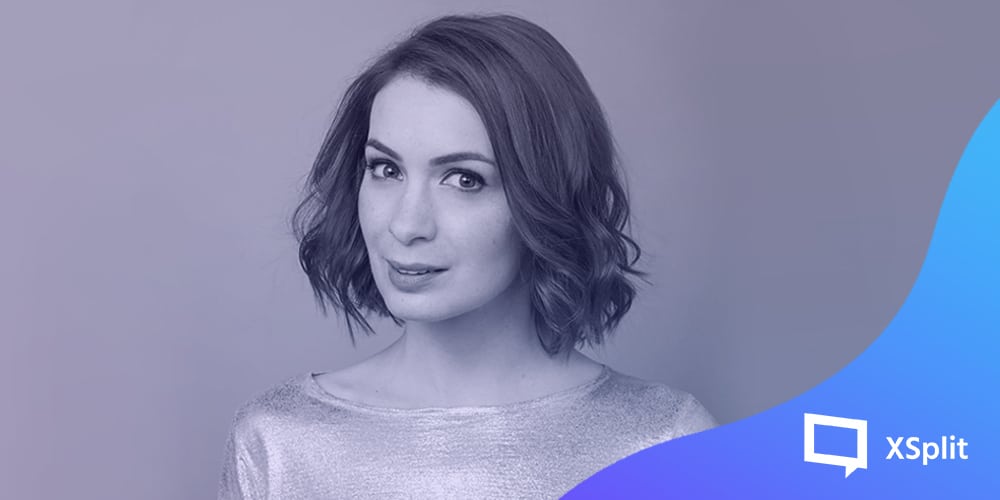
Interview with Felicia Day, and how she streams tabletop with XSplit

Felicia Day’s body of work is well known throughout the geek-o-sphere! Creating seminal web series – The Guild – watched by millions worldwide; to pioneering tabletop live streams on Twitch, or starring in cult hits such as Supernatural, The Magicians, and Buffy The Vampire Slayer. 

The Guild DnD

We had a chance to catch up with her, before she kicks off a new series of D&D live streams with an all-star cast of familiar faces. Join us as we dive into the challenges of live streaming tabletop games. She shares her history of using XSplit, as well as some sage advice that may help guide your own eventual D&D stream in the future!

What is it about tabletop that you think translates so well to a live-streamed format?

I think that the live format works best for gaming like D&D just like it works best for comedy improv. The spontaneity of the moments is more believable when you can SEE people making things up! When you edit things into smaller, more polished videos, the audience starts to feel like it was all staged, even if it was made up on the spot. Also, some live moments are hilarious in person (or on live stream) but don’t seem as funny later, when you’re not actually in the crowd. 

What challenges have you faced translating a game to a live stream when you can’t have everyone in the same room?

Other than tech issues, which are ALWAYS an issue with live streaming, not having everyone in the same room playing is challenging because there’s a natural chemistry between people. If you can read other peoples’ facial expressions and anticipate someone speaking, you can build on what they’re doing easier for story and jokes. Remotely, you kind of have to find a different kind of rhythm for not talking over each other as well. The good thing is that The Guild has been together since 2007, so we have shortcuts between each other that help overcomes hurdles faster than a new group would. 

You’ve been using XSplit for a while now for your streams, why is that?

I first started streaming in the fall of 2014, so a LONG time ago! I did it while I was running a big company called Geek and Sundry. It was a personal outlet where I wanted to get in touch with my internet roots. Because I was so busy, I didn’t have a lot of bandwidth to figure out the tech of it all. In searching for ways to stream simply and easily, XSplit stood out among the options as most turnkey. I’m so glad I did! Five+ years later I’m still going strong!

You’re going to be producing some live D&D streams soon, can you tell us about what and who we can expect? 

I am going to be producing 4 D&D streams with The Guild cast on Sundays at 7pm PST on my twitch.tv/feliciaday channel! I’m thrilled to be able to bring the cast together after many years of not making videos! We did a charity stream last month that raised 40k and couldn’t wait to get the gang back together for more! DM Amy Vorhpal is so funny, the streams will be a riot I’m sure! Thank you to XSplit for sponsoring and giving us the ability to do this 4 episode story arc!!! 

Finally, what advice would you give to someone looking to start their own D&D stream?

I would urge people to innovate from what other people do if they can. Standing out in a crowded field requires imagination and incredible chemistry between players. But don’t hold back on just streaming for fun if you don’t have a genre-cracking idea right away!

You need to make your content as unique as you are. But sometimes we have to try simpler things before reinventing the wheel. Watch what other people are doing who are successful in the field.

Think about what your own version would be and what different twists you could put on it. And have fun first and foremost! You won’t go the distance without having an organic connection with what you’re creating. If you start streaming D&D because you want fame or money or followers, you’ll burn out and quit fast.  Do what you love first, that way you’ll stick with it and learn from everything you do!

The Guild D&D 4 Part Adventure Arc kicks off May 17 at 7:00 P.M PST, and will be running every Sunday until June 7 on twitch.tv/feliciaday. Join Felicia Day and an all-star cast featuring Sandeep Parikh, Amy Okuda, Jeffrey Lewis, Robin Thorson, Vince Caso with Amy Vorpahl as DM. 

Streamers we like and why you should watch them

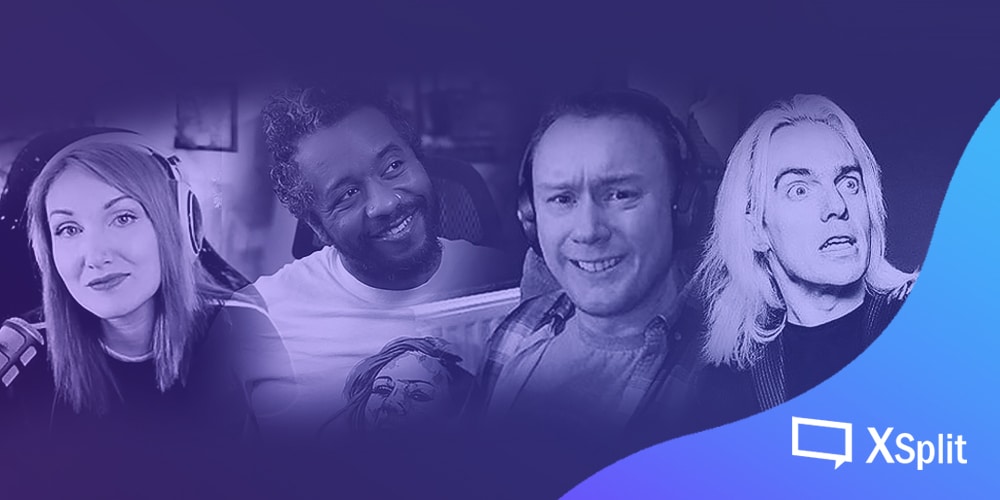
I’d imagine it wouldn’t surprise many people but the team here at XSplit watch a lot of streams! We wanted to take some time to highlight a few of the streamers we’re watching the most at the moment and why you should check them out! First up, it’s me, Chris Slight, in what will hopefully be the first of many lists like this from members of staff here at XSplit!

*Note from the author: Some of the clips below will have swearing or spooky games in them. So ya know, take that into account if you were going to play them on a giant screen in front of children!

Pumpkinberry

I have been watching Pumpkinberry for about three years now (subbed for two of those years!) and from the first time I watched to this day it feels like listening to an old friend have a chat. PB (as her viewers know her) is very funny, honest, and open with her emotions, something that makes watching her play through a story-driven game a treat! Also through series like Gone and Nocturne, she is making amazing tabletop RPG stories that are live-streamed through various channels! There’s always time for a cup of tea, a chat, and some good games when Pumpkinberry is on!

Tune in at twitch.tv/pumpkinberry

Clips

(She went to NASA one time to stream a launch and here she is high-fiving an astronaut!)

Okaydrian 

Okaydrian is the best stage and TV presenter in the game’s world I’ve ever met. You might know him from GameStop TV, hosting stages for Twitch at E3, or interviewing pop culture titans like Stan Lee or CM Punk at C2E2! He’s hilarious, for starters, like honest laughter hilarious. You know how some people are funny but in that “yeah, I see there is a joke there” little “hah” kind of laugh? That’s not Okaydrian, he’s gut-busting kind of funny. He can also talk about serious subjects in an educated manner with principle and conviction while never closing the door to learning something new about himself or others. He also loves Shenmue so you know I’m gonna love every other game he’s playing!

Tune in at twitch.tv/okaydrian

Clips

SteveFromGo8Bit

If you don’t know Steve McNeil you might know Dara Ó Briain’s Go 8 Bit, a UK panel show based around comedians playing video games against each other! Steve was one of the team captains! (He was actually one of the people who came up with the entire idea but that’s a story for another blog, or the Comedians Comedian podcast he was on).

He’s great!

Steve not only plays games and is a lovely funny person his channel also hosts Wi-Fi Wars, the world’s only interactive game show (the tech of which was created by King Rob, someone being referenced when Steves chat type “AHKR” which stands for “All Hail King Rob!”) where you can play games on your smartphone against everyone else in chat. This tech is also used for the Video Game Game Show Show (imagine Go 8-Bit but on the internet), a Pub Quiz using the WiFi Wars tech, TableTop gaming online, and more!

Go watch Steve and grab the whole family for fun games and good times! Steve is also lovely, kind, and will insult you on a personal level for a redemption of stevebucks! Also, Steve has one of the best communities around. So, you’ll always find the chat welcoming, funny, and ready to have a good time!

Tune in at twitch.tv/SteveFromGo8Bit

Clips

Bonus clipped by me when he first started streaming
https://www.twitch.tv/stevefromgo8bit/clip/DeliciousHelplessBeanBrokeBack

Robbotron

John Robertson is a comedian you might know from The Dark Room, a live interactive text adventure that he’s now successfully translated to Twitch (and streamed for 48 hours for charity!), he also runs his Arrgh Pee Gee! show on Twitch where the chat decides what happens. Beyond that though, John is, without doubt, unlike anyone you’ve seen streaming before. Energy radiates through your display of choice just watching him. You will be able to power a small home with the vibrations from your laughter. Chatter, game playing, songs on the ukulele by request, and hanging out with your Step Dad (really, check out his streams)! John is strongly in the NSFW category and all the better for it! Seriously, I wrote that little warning at the top mostly thinking “yep, I’m putting John in this list”.

Tune in at twitch.tv/robbotron

Clips

This list should hopefully introduce you to some brilliant new streamers and communities to get involved with! Be sure to let us know who you have been watching in the comments or on our socials. It would be great to get a reader list going as well! Until next time, friends.